
When Waiting Isn’t Wasting: Becoming a Praying Church
What’s your instinct when something needs to get done — wait or move?
Most of us move. We fix. We act. We figure it out. Because waiting feels like wasting.
But Acts 1 shows us something different.
After Jesus’ resurrection, He spent 40 days with His disciples, proving He was alive and preparing them for their mission: to be His witnesses to the ends of the earth. Then He ascended into heaven — and gave them one clear instruction: wait.
So they did. But they didn’t waste that waiting.
They prayed.
In Acts 1:12–26, we find the early church gathered in an upper room—apostles, everyone who followed Jesus, Mary His mother, and His brothers — all “joined together constantly in prayer” (Acts 1:14). Before the Spirit came, before the church launched, before any strategy was executed, they were a praying people.
And what we see in this moment reveals what prayer is meant to be for us today.
1. Prayer Reveals Our Need
Look at who’s in the room.
Peter, who denied Jesus.
Thomas, who doubted.
Matthew, the former tax collector.
Simon the Zealot, a political extremist.
Others we barely know.
These weren’t spiritual superheroes. They were ordinary, flawed people — just like us.
And they knew it.
Prayer begins when we recognize we don’t have what it takes on our own. That’s not weakness to avoid — it’s reality to embrace. God designed us to depend on Him.
Even Jesus, in His humanity, turned to the Father in prayer in His moment of deepest distress (Matthew 26:38–39).
Prayer is where we stop pretending we’re self-sufficient and start living like we actually need God.
2. Prayer Reflects Our Identity
Acts 1:14 says they were “constantly in prayer”— together.
This wasn’t formal or forced. This was family.
Prayer isn’t about performing for God — it’s about relating to Him. Through Jesus, we don’t approach God as strangers or employees, but as sons and daughters.
That changes everything.
Instead of pressure or guilt, prayer becomes access. It’s like a child walking into the living room, sitting next to their parent, and just talking. No script. No fear. Just belonging.
When we understand our identity in Christ, prayer becomes our natural first response — not a last resort.
3. Prayer Demonstrates Our Faith
In this passage, the disciples face a real decision: replacing Judas.
They searched the Scriptures. They identified qualified men. They used wisdom.
And then — they prayed:
“Lord, you know everyone’s heart. Show us which of these two you have chosen…” (Acts 1:24).
That’s faith.
They believed God saw what they couldn’t, knew what they didn’t, and led better than they ever could.
So, they didn’t just ask God to bless their decision — they invited Him to make it.
That raises a question for us: what does our prayer life say about what we actually believe about God?
If we only pray in crisis, do we trust Him daily?
If we pray after we decide, do we believe He knows best?
The early church didn’t move and then pray. They prayed and then moved.
4. Prayer Expresses Humble Submission
The disciples did their part — but they didn’t control the outcome.
They held their plans with open hands: “Lord, You choose.”
That kind of humility is hard. We don’t just want clarity — we want control.
But prayer loosens our grip.
It’s where we say, “God, I trust You more than I trust me.”
You can’t follow Jesus with clenched fists. Prayer opens them.
A Simple Practice: Pause, Pray, Proceed
If we want to become a praying people, we need something practical.
Think of prayer like a stoplight:
Pause.
Pray.
Proceed.
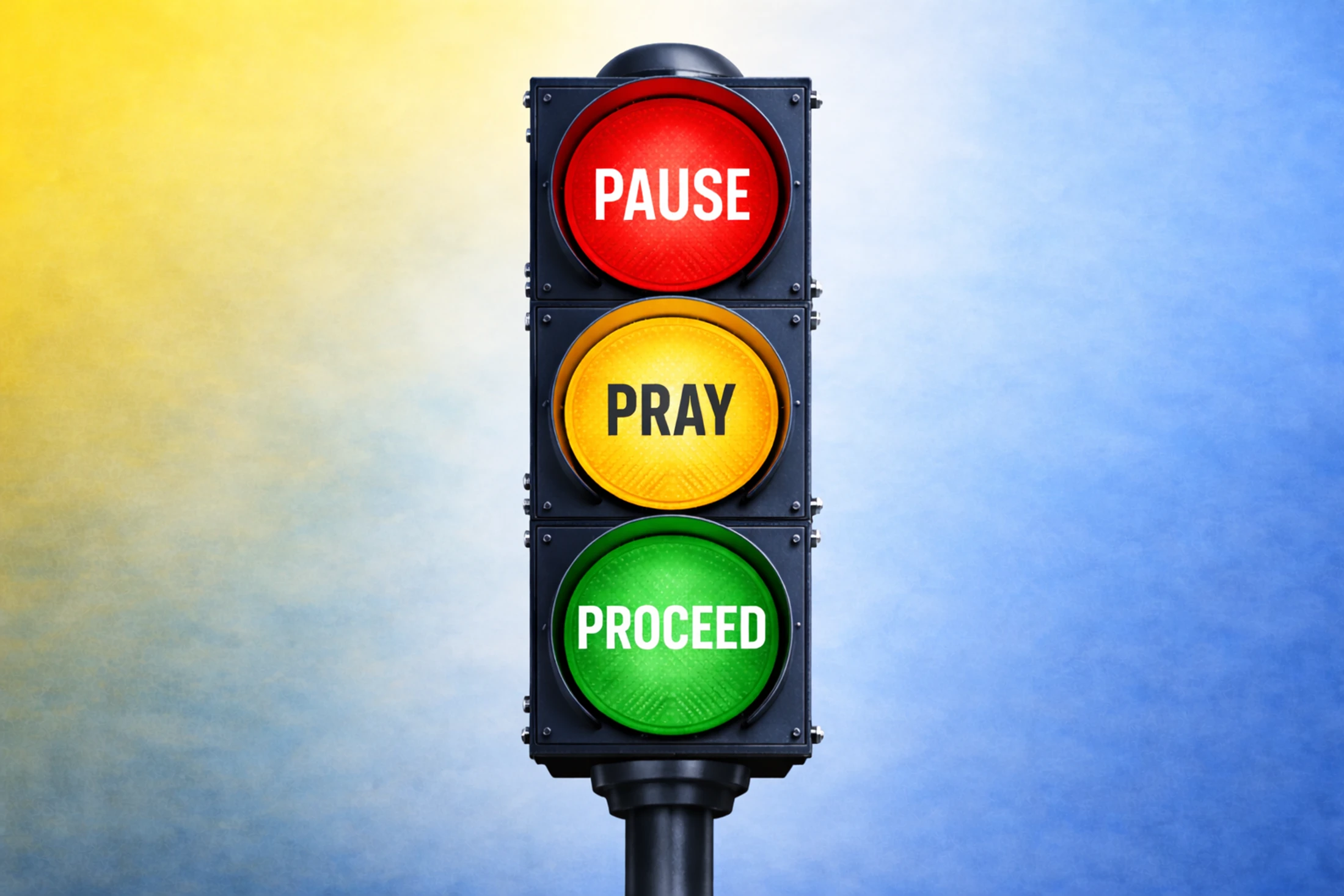
Pause when something hits — a decision, stress, conflict.
Pray without delay — simple, honest, immediate.
Proceed in faith, trusting God is leading and providing.
Before you speak. Before you respond. Before you decide.
Pause. Pray. Proceed.
The early church didn’t just believe in prayer — they depended on it.
And God met them there. He led them, empowered them, and multiplied their impact — not because they had better plans, but because they had deeper dependence.
If they wouldn’t move without prayer…why would we?
Watch The Full Message
Take Your Next Step
1. Practice Pause–Pray–Proceed Today
Before your next decision or stressful moment, pause and pray:
“Lord, You know what I don’t. Lead me, and I’ll follow.”
Then move forward trusting He’s with you.
2. Share a Prayer Request
You don’t have to carry this alone. Our team would be honored to pray for you this week.
3. Pray With Others
The first church didn’t move without prayer—and we don’t want to either. Ask about serving on our Prayer Team.
4. Explore a Relationship With Jesus
If you’re not sure where you stand with Jesus, but you’re hungry for something more, we’d love to listen, pray with you, and talk about what it means to follow Him and be baptized.
-Post contributed & edited by Dave, one of our amazing volunteers!