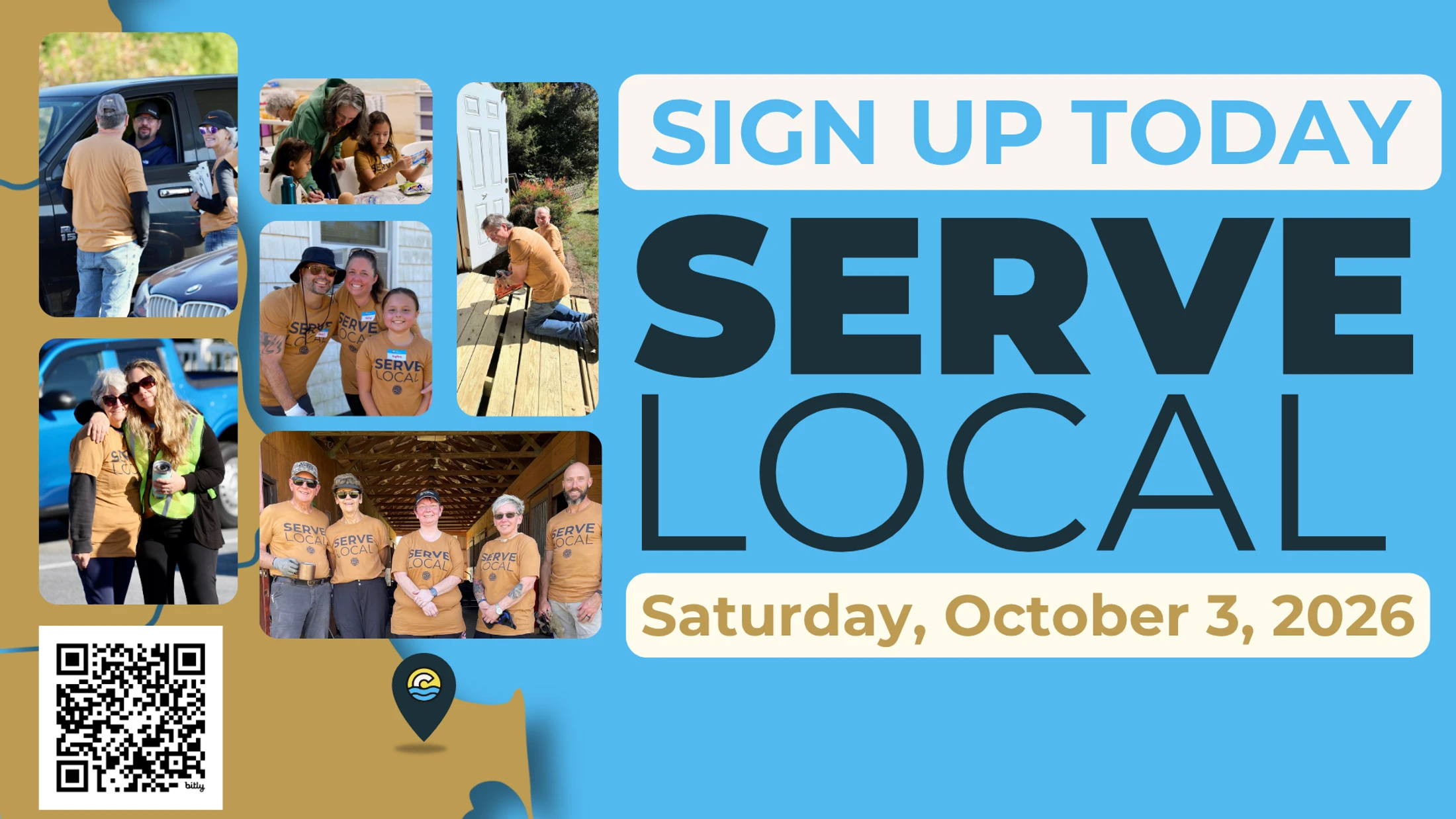
Serve Local Is Coming
Join us Saturday, October 3 at 9:00 AM as we go out and love our community through practical acts of service. Projects are available for different interests and skill levels, and everyone is welcome.

What are you supposed to do when you realize you’ve been wrong about Jesus and wrong about the way you’ve been living? In “What Shall We Do?” from the Acts series at The Crossing in Milton, DE, Adam Woods walks through Acts 2:22–24, 36–41 and Peter’s powerful answer to that question. On the day of Pentecost, Peter explains that Jesus—whom they crucified—has been raised from the dead and made both Lord and Messiah, and the crowd is cut to the heart. Their desperate question, “What shall we do?”, is the same question many of us are still asking today.
In this message, Adam shows how Peter’s response is both simple and costly: “Repent and be baptized, every one of you, in the name of Jesus Christ for the forgiveness of your sins.” (Acts 2:38, NIV) This sermon speaks to people wrestling with guilt from their past, shame they can’t shake, confusion about salvation, and those who have been around church but never taken a clear next step. If you’ve ever searched “how to be saved,” “what does the Bible say about repentance and baptism?,” or “how to start following Jesus,” this teaching offers a clear, Bible-centered path forward rooted in Acts 2.
In “What Shall We Do?”, Adam explains that repentance is more than feeling bad—it is turning from sin and self-rule to trust Jesus as Lord, and baptism into Christ is the God-given way we respond in faith, receiving forgiveness and the gift of the Holy Spirit. The message also calls believers in Milton, DE, Dover, DE, and beyond to see salvation as the beginning of a life of discipleship, not the finish line. In this Acts series, The Crossing is all about developing devoted followers of Jesus who will develop devoted followers of Jesus, and this sermon invites not-yet-believers to explore Jesus, consider repentance and baptism, and invites believers to share this good news and walk in obedience this week.
“What Shall We Do?” is a sermon from The Crossing in Milton, DE where Adam Woods teaches from Acts 2:22–24, 36–41 about how to respond when we see who Jesus really is. He explains Peter’s Pentecost message and shows that the right response is to repent and be baptized in the name of Jesus Christ for the forgiveness of sins and the gift of the Holy Spirit. The sermon calls listeners to move from vague belief to a clear, biblical step of obedience.
Adam Woods explains that repentance in Acts 2 means a decisive turn from sin and self-rule to trust Jesus as Lord, not just feeling regret or making a few moral improvements. He shows that Peter connects this repentance with baptism into Christ as the concrete way people in Acts 2 responded to the gospel, calling each person to personally surrender to Jesus. At The Crossing, this sermon teaches that salvation is God’s gift of grace, received through faith that responds with repentance and baptism into Christ for the forgiveness of sins and the gift of the Holy Spirit, as stated in Acts 2:38. In baptism, believers are united with Jesus in His death, burial, and resurrection, are washed clean of their sins, and are added to His church as they begin a new life of following Him as devoted disciples.
Adam Woods explains that repentance in Acts 2 means turning from sin and self-rule to trust Jesus as Lord, not just feeling regret. He shows that Peter connects this repentance with baptism into Christ as the way people in Acts 2 responded to the gospel, trusting God’s promise in obedient faith. At The Crossing, this sermon teaches that salvation is by God’s grace and received through faith that responds with repentance and baptism into Christ for the forgiveness of sins and the gift of the Holy Spirit, as stated in Acts 2:38. Salvation is not earned by these actions, but God has chosen to meet us in them as we unite with Jesus in His death, burial, and resurrection.
“What Shall We Do?” helps people struggling with guilt or shame by showing that the very crowd who crucified Jesus was offered forgiveness and new life in Acts 2. Adam Woods explains that if God can forgive them, He can forgive us when we turn to Jesus in repentance and baptism. This passage to assures listeners that no sin is beyond the reach of God’s grace when we respond to Jesus as Lord and Messiah.
At The Crossing, we’re all about developing devoted followers of Jesus who will develop devoted followers of Jesus. That’s our mission. Much of our mission comes from what we see happening in the early church in the book of Acts.
And honestly—nothing does my heart better than seeing that happen right here among us…and through SERVE LOCAL, I’ve been hearing stories.
Connor and Jim painting a desk for one of our mission partners—LOVE INC—not just serving, but having meaningful conversation and praying for their mission. [PIC]
Or the Pangle’s painting rocks with scripture verses to leave in downtown Milton—praying over the town and the families and for those finding the rocks to be moved by God’s Word. [PIC]
Or Julie and her LIFEgroup loving on some of the local elementary paraprofessionals. [PIC] Just a bunch of stories of our people on mission.
Even right now—we’ve got a group of servants on their way to Tennessee to serve in disaster relief. [PIC]
And Church—I just want to say this: Praise God. We are becoming the kind of people who take the mission of Jesus seriously.
Hey—right now—can we just pause and pray for that mission team? Let’s pray. [How beautiful are the feet of those who bring good news…spirit filled, on mission, to love and serve and bring good news…protect them, provide for them, use them…]
Now—we’ve been in this sermon series in the book of Acts, and don’t we see the same thing happening there?God’s people, filled with the Spirit, going on mission—to develop devoted followers of Jesus.
Last week in Acts 2—we watched the upper room prayer huddle break—the Apostles left the huddle to run the play.
The Spirit filled God’s people…
The Church spoke…
And the gospel was declared.
But here’s the question for today: What happens when the gospel actually lands? What happens when people don’t just hear it—but believe it? What do they do, what’s next?
Because the goal of the gospel is never just information. It’s transformation.
So if last week was:
The Spirit fills → The Church speaks → The Gospel is declared
Then today is:
When people believe the gospel, hearts are changed and people respond.
Let’s turn back to Acts 2 [p936], and lets briefly look back on Peter’s sermon—just to make sure we’re all ready for today. Acts 2—verse 22
READ Acts 2:22-24, 36
Fellow Israelites, listen to this: Jesus of Nazareth was a man accredited by God to you by miracles, wonders and signs, which God did among you through him, as you yourselves know. This man was handed over to you by God’s deliberate plan and foreknowledge; and you, with the help of wicked men, put him to death by nailing him to the cross. But God raised him from the dead, freeing him from the agony of death, because it was impossible for death to keep its hold on him…[36] Therefore let all Israel be assured of this: God has made this Jesus, whom you crucified, both Lord and Messiah.
That’s what Peter preached—He starts with Jesus—because everything hinges on Jesus.
Accredited by God…
Crucified for our sin—according to God’s plan…
Raised from the dead—because death couldn’t hold Him…
Exalted as Lord and Messiah.
That’s the good news of Jesus—the gospel.
Or even more simply: Jesus lived. Jesus died. Jesus rose. Jesus reigns.
And because Jesus reigns—He is not one option among many—He’s the only option. In fact He Himself said it plainly in John 14:6, I am the way and the truth and the life. No one comes to the Father except through me.
Now let’s be honest—we don’t always like that. We want there to be other ways. We like options. We want a little control over how this works.
So what do we do? We create our own paths.
Some of us go the I’m a good person route:
“I’m not perfect… but I’m better than most.”
As if comparison is the standard.
Others go the religion route:
“If I do enough good… say the right things… show up enough… maybe I can tip the scales in my favor.”
And then a lot of us—especially today—we go inward.
Self-help. Better habits. Discipline. Cold plunges.
“Fix myself. Improve myself. Become the best version of myself.”
And listen—some of that can be helpful…but none of it goes deep enough. Because here’s the problem—we’re not just a little off. We’re not just in need of improvement.
We are broken at the core.
And none of those paths—not comparison…not religion… not self-improvement—none of them actually deal with our sin.
Only Jesus can do that. Only Jesus has done that.
So yeah—you can be frustrated there aren’t more ways…
or you can be grateful there is a Way and you’ve been invited through it.
There is only one way. His name is Jesus. Why? Because He is the only One who conquered death. Most other religions say the way to life is through something you achieve—something you do —some level you reach. Most religions exist to show you the way to win.
But Jesus didn’t come to show you the way—He came to be the way.
When Jesus walked out of that grave, He won—He defeated sin. He conquered death. He opened the door to eternal life for us—and by grace, we have been invited in.
And that changes everything.
Because when this truth actually lands…when you really believe that…you don’t just nod your head and move on.
You respond. And that’s exactly what happens in Acts 2.
They don’t just hear Peter’s message and go, “Huh… that was interesting.”
No—because when the gospel is declared, hearts change. Look at what happens next. When the people heard this, they were cut to the heart and said to Peter and the other apostles, “Brothers, what shall we do?” [Acts 2:37]
You ever had that moment where you realize—you’re not just watching something…you’re actually in it? That this isn’t just about them…it’s about me?
[Some of you are closer to this moment than you think.]
The crowd that day—they weren’t mildly interested. They weren’t casually inspired by Peter’s words. They didn’t say, Hey—that was a good one today. They were cut to the heart—pierced all the way down—Convicted. Hearts stirring—minds tracking.
They had faith in what Peter preached. In that moment they felt the weight of things—the knew it was true: We rejected Jesus. We crucified Him. He really is Lord.
And out of that moment of faith—they ask the most important question anyone can ever ask: “Brothers, what shall we do?”
That’s the question.
The question after a sermon isn’t, “Was that a good sermon?” The conversation isn’t, “Do I agree with everything that was said?”
The question is, what do we do? We believe what we heard, how do we respond?
Peter answers—v38:
Repent and be baptized, every one of you, in the name of Jesus Christ for the forgiveness of your sins. And you will receive the gift of the Holy Spirit. [Acts 2:38]
That’s the answer. That’s how to respond.
First he says: Repent.
Faith says, Jesus is Lord and Messiah.
Repentance says, I am not.
Repentance is surrender. It’s a change of mind that leads to a change of direction.
Some of us look at the canvas of our lives and see nothing but smears—sin, shame, addiction, regret, secrets we can barely admit. And…before Jesus…that’s all true.
But here’s what we do…we think, Let me fix this first, then I’ll give it to God.
But the more we try to fix it ourselves, the worse it gets.
Repentance says: God, I can’t fix this. I’m done pretending. I’m done running. I’m done being lord of my own life. Here’s the brush. Here’s the canvas. You do it.
Turning it all over to Him—just as you are—that’s repentance.
Then—Peter says—be baptized.
Baptism is the public, personal, obedient response of faith.
The word baptism means “to immerse in water.” Not because the water saves you. Jesus is the One who saves you.
But in the Bible, baptism is a watery grave where the old you is buried with Christ, and the new you is raised with Him. It’s a three-second reenactment of three days in the tomb: Down into the water— buried with Jesus. Up out of the water—raised to new life.
Since everything hinges on Jesus’ death, burial, and resurrection—it makes sense that the way we unite with Jesus and enter into His kingdom is through our own death, burial, and resurrection.
Can I show you what that looks like? Because just last week, 4 ladies believed the good news and were baptized—buried with Jesus, raised to new life in Him. [BAPTISM VIDEO]
And when you read the book of Acts—this is what you see. Belief and baptism go together. And in that moment—all of your sins are forgiven and the Holy Spirit comes to live in you. Everything that separated you from God—gone. Everything you need to live a new life—given.
Then—don’t miss v39: Peter says, The promise [of forgiveness and the Holy Spirit] is for you and your children and for all who are far off—for all whom the Lord our God will call.
That means this is for:
The religious and the not-so-religious.
The church kid and the skeptic.
The ashamed, the addicted, the angry, and the exhausted.
The one who’s been pretending and the one who thinks it’s too late.
Hear me—this promise—of forgiveness, of the Holy Spirit, of eternal life—is for you. Jesus has way more grace than you have sin.
Then Peter turns up the urgency in v40: With many other words he warned them; and he pleaded with them, “Save yourselves from this corrupt generation.”
That’s not pressure or manipulation—that’s love. When you see the storm coming, you warn people.
It’s not simply about going to heaven. This is new life here…and now—and we want people to know that! The storm is coming.
Jesus is the way. He made it possible. He paid the price. You can’t earn it. You don’t deserve it. You simply walk through by faith.
And…real talk…without Jesus washing away your sin…there is no hope of eternal life.
Look at what happens: v41 Those who accepted his message were baptized, and about three thousand were added to their number that day.
That day. Not later.
When people believed—they responded immediately.
Listen, the Bible makes it clear—repentance isn't optional, baptism isn’t optional nor should it be postponed—it’s the first step of faith. It’s the line in the sand—the moment you say, I’m with Jesus.
So—WHO SHOULD BE BAPTIZED?
Anyone who believes in Jesus and is ready to follow Him.
WHEN SHOULD YOU BE BAPTIZED?
When you believe in Jesus and are ready to follow Him.
Now let me address some of the things you may be thinking:
I didn’t bring clothes—we’ve got you covered.
I don’t know enough—Do you know you’re a sinner and Jesus is the One takes care of that sin? I was baptized as a baby—Me too! And praise God for our parents. But this salvation is your decision.
But I’ve been walking with Jesus, I just haven’t been baptized—great, come and be baptized— obeying Jesus and fulfilling all righteousness.
What will my family think?—they’re going to see your step of faith. And whether they understand it or not, this is about your response to Jesus.
And this family?—we’re gonna celebrate!
CONCLUSION
Here’s what unfolds in Acts 2:
The Spirit fills.
The Church speaks.
The Gospel is declared.
And when the gospel is believed.
Hearts are convicted.
People respond.
And now—it’s our turn.
Let me highlight two responses today.
If you’re a follower of Jesus: this is what you TELL YOUR ONE.
Around here, we talk a lot about your one—that one person God has placed in your life that you’re praying for, inviting, influencing, loving toward Jesus.
If you’re a follower of Jesus today: SHARE WHAT YOU HEARD TODAY WITH YOUR ONE.
This is what you say. You don’t need fancy words. Jesus lived. Jesus died. Jesus rose. Jesus reigns. And He wants them—to turn to Him, trust Him, and follow Him…just like you once did.
And if/when they ask how they do that? You tell them what Peter said—repent and be baptized.
And if you’re here today and you’re not yet a follower of Jesus: BE THE ONE. Respond to what you heard.
If you believe it, repent. Be baptized. Walk through the door.
Not someday. Today.
If you’ve got questions—ask them! If you’ve got doubts—wrestle with them. Ask God about them. Take a next step of faith.
Ya know, this isn’t the first place in Scripture where water marks the end of one life and the beginning of another. It actually happens a lot—Old Testament and New—but there’s one that most everyone has heard of—even if this is your first day in church.
In Genesis, the world had become dark—broken by sin, violence, rebellion. And God told Noah to build an ark. Because a storm was coming.
And one detail is easy to miss: the ark had one door. Not several doors. Not options all around the boat. One door.
And through that one door, Noah and his family were saved. Rescued from the storm. The waters came. The old world was buried beneath them. And when the waters receded, Noah stepped out into a brand-new beginning.
The old was gone. The new had come.
And Peter—our preacher here in our text today—Peter actually connects that story to baptism in 1 Peter 3. He says about Noah’s ark—In it only a few people, eight in all, were saved through
water, and this water symbolizes baptism that now saves you also—not the removal of dirt from the body but the pledge of a clear conscience toward God. It saves you by the resurrection of Jesus Christ. [1 Peter 3:20-21] Peter says that the flood back in Noah’s day points us forward—because people were saved when they entered the one door and sin was washed away and new life resulted.
The old life buried.
The new life raised.
Noah’s flood is a resurrection story. And that’s what baptism is.
It’s not just getting wet. It’s not just an outward expression or checking a church box.
It’s you saying, “Jesus, I’m walking through the door. I’m done trying to save myself. I accept your free gift of grace.”
And hear me—the door is open. Jesus is the door. Jesus is the way. Jesus died for you. Jesus rose for you. And today, He is inviting you into new, eternal life.
Can I tell you about one other detail in the Noah’s ark story? It comes in Genesis 7:16—and it just says, Then the LORD closed the door behind them. [NLT]
There is coming a day when the door will no longer be open. When the storm comes and if you haven’t entered through the door of Jesus, you will suffer the consequences of that choice forever.
In just a moment we’re going to pray, and then we’re going to sing a closing song—we love to sing around here.
As we sing, if today is your day to respond—to walk through the door—if you want to repent and be baptized—I want you to come. Come to the baptistry—Grab me. Grab someone you came with and say, “I need to do this.”
We’ve got everything you need—clothes, towels, all of it.
Maybe baptism wasn’t on your calendar today. But maybe it was on God’s.
And I’ll just use the words of Acts 22:16
And now what are you waiting for? Get up, be baptized and wash your sins away, calling on his name.’
LET ME PRAY FOR YOU.