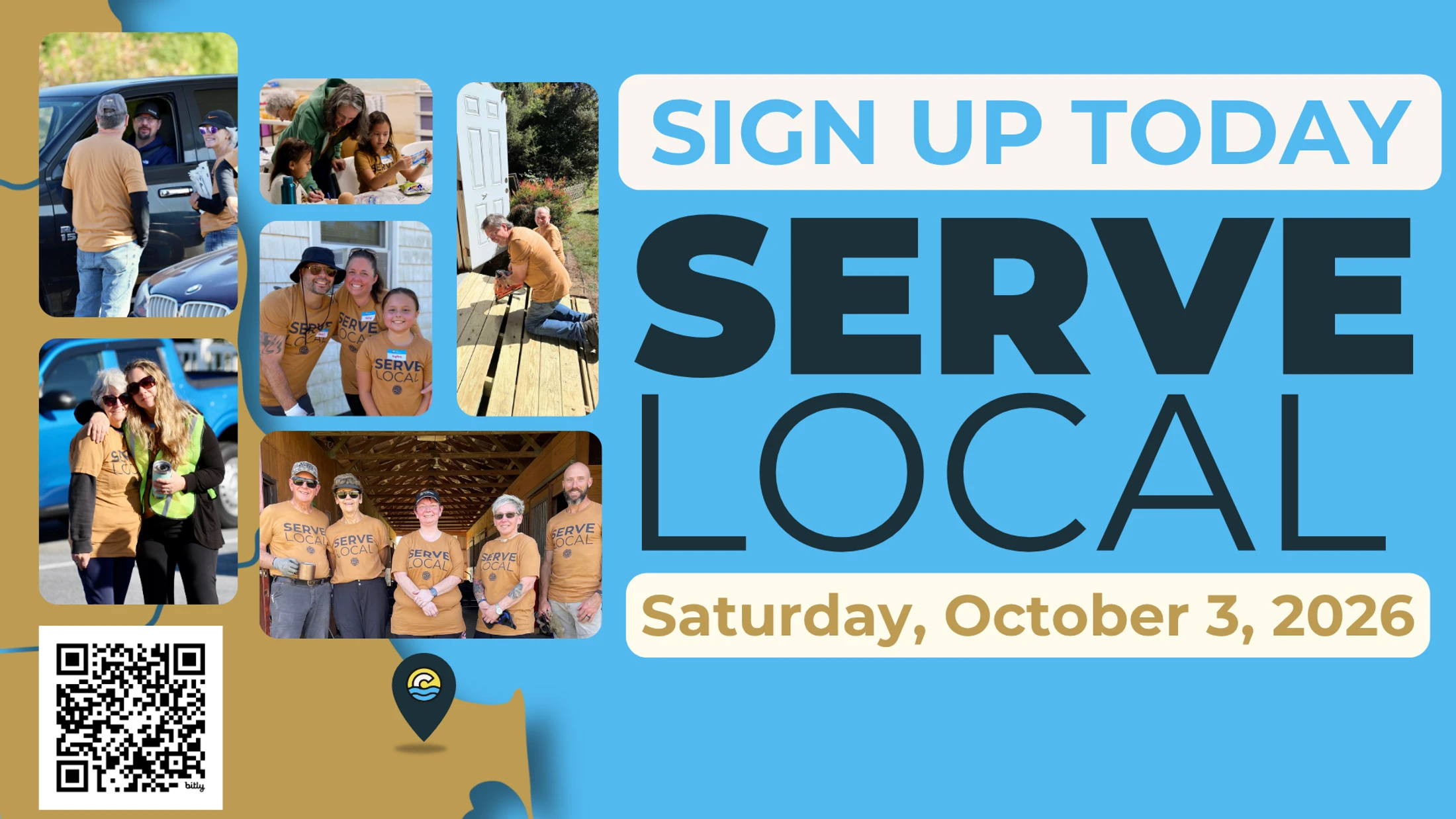
Serve Local Is Coming
Join us Saturday, October 3 at 9:00 AM as we go out and love our community through practical acts of service. Projects are available for different interests and skill levels, and everyone is welcome.

What’s your first move when something needs to get done — do you rush to fix it, or do you pause and pray?
In this message, “In Dependence,” from our Acts series, Adam Woods walks through Acts 1:12–26 and the ten quiet days between Jesus’ ascension and the coming of the Holy Spirit. Instead of charging ahead with their own plans, the followers of Jesus in that upper room in Jerusalem “all joined together constantly in prayer” (Acts 1:14, NIV). Their waiting wasn’t wasting; it was deep dependence.
In this sermon from The Crossing in Milton, DE, Adam shows how everything the apostles did was bathed in prayer — from searching the Scriptures to replacing Judas and stepping into their mission. He unpacks four truths: prayer reveals our need, reflects our identity as God’s children, demonstrates our faith, and expresses humble submission to God’s will. This teaching speaks directly to people wrestling with anxiety, control, indecision, and the pressure to always “figure it out” on their own. If you’ve ever wondered how to wait on God, what to do when God feels silent, or how to grow a life of dependence on God instead of self-reliance, this message will meet you where you are.
“In Dependence” offers practical language for a prayerful life: PAUSE. PRAY. PROCEED. Before the email, the conversation, the financial decision, or the conflict at home, we’re invited to stop, turn to our Father, and then move forward in faith. For those not yet following Jesus, this sermon is an invitation to explore who Jesus is, to turn from self-rule, and to consider repentance and baptism into Christ as the beginning of a new life of dependence on Him. For believers at The Crossing and across Dover, DE and beyond, it’s a call to reorder everyday life around prayerful obedience, trusting that God leads, provides, and empowers His people just as He did in the book of Acts.
In “In Dependence,” Adam Woods from The Crossing explains that prayer was the early church’s first response, not a backup plan. Looking at Acts 1:12–26, he shows how the apostles bathed their waiting and decision-making in prayer instead of rushing ahead. Prayer reveals their need, identity, faith, and humble submission to God’s will. The sermon invites listeners today to adopt the same posture of dependence through a simple rhythm: PAUSE. PRAY. PROCEED.
This message from The Crossing in Milton, DE uses the upper room scene in Acts 1 to show that waiting on God is not wasted time when it is filled with prayer. Adam Woods highlights how the disciples waited ten days in prayer for the Holy Spirit instead of forcing their own plans. That kind of waiting deepens dependence, clarifies next steps, and trusts that God sees what we can’t. The sermon offers practical help for turning stressful moments into prayerful dependence.
Adam Woods summarizes a life of dependence on God with the picture of a stoplight: PAUSE. PRAY. PROCEED. When a decision, conflict, or worry hits, we first pause instead of reacting, then pray simple, honest prayers like “God, I need You,” and finally proceed in faith. At The Crossing, this framework is presented as a way to make prayer your first response in everyday life, not just something you do when everything falls apart. It reflects the example of the early church in Acts 1.
In this sermon, The Crossing teaches that real prayer opens our hands and lets God overrule our plans when needed. Using Peter and the apostles’ decision to replace Judas in Acts 1:15–26, Adam Woods shows that they searched Scripture, used wisdom, and then surrendered the outcome to God in prayer. This models humble submission rather than demanding control. Listeners are challenged to trust God more than themselves in decisions, finances, relationships, and mission.
The main biblical message is that followers of Jesus are called to live in dependence on God, not self-reliance. Drawing from Acts 1:12–26, Adam Woods shows that the early church did not move without prayer, because prayer revealed their need, identity, faith, and submission. The sermon encourages people to turn from “I’ll handle it” to “Father, I need You,” and to respond to Jesus in repentance, baptism, and ongoing discipleship. It’s a call for the church today to become a truly praying church.
Let me ask you—what’s your natural instinct when something needs to get done? Do you wait…or do you move?
Most of us—we move. We fix. We act. We figure it out. Because—waiting feels like wasting. Doesn’t it? Waiting feels like wasting.
I remember putting together a bed frame for Lydia that we got from IKEA. Not complicated. I’m a man. I’m the man. I can figure it out.
Michelle asked—hey, the instructions are in the box, you want them?
Ha—instructions—I got this!
20 minutes later—I’ve put it together…and taken it apart. I’ve spoken to myself using several words in different languages. I’ve repented for some of those words.
I don’t get it! Parts were missing. There were extra screws.
And so I finally stopped and went back. I grabbed the instructions. And quickly realized: if I had just paused at the beginning, I would’ve saved myself a lot of time, frustration, and a bigger mess.
Now—that’s funny with a project. That’s not funny with real life.
And too often—that’s how we treat prayer. Optional. Secondary. Something we’ll get to if things fall apart.
Well, that’s not how it was in Acts 1. The Apostles didn’t rush ahead. Jesus told them to wait. And while they waited…the prayed.
Let’s get caught up. Last week we read the first 11 verses of Acts 1. For 40 days after His resurrection, Jesus hung out with His chosen ones and proved that He was alive. He told them to wait for the promised Holy Spirit who would give them power for their mission to be His witnesses in Jerusalem, all of Judea and Samaria and to the ends of the earth. Then…He ascended into Heaven before their very eyes.
Let’s pick up right there. Acts 1:12-26 [Read it]
Now I hope—whenever you read the Bible—you do your best to let the scene unfold in your mind. Remember these are real people in real time living real life.
So the Apostles are confident—full of joy—Jesus is alive, He’s reigning as King in Heaven, and they have a mission until He comes back. I imagine it was either a crazy talkative walk back to Jerusalem as they rehashed all the things they’d just seen. Or—it was silent—everyone processing the events of the previous couple hours.
Either way—they head back, get to the place they were staying, and climb the stairs to an upper room. 11 Apostles, the women who anointed Jesus’ body for burial, Mary His mom, and His 4 brothers are all there. And what were they doing?
They were told to wait. And wait they did. But waiting isn’t wasting. While they waited—they prayed. For 10 days, awaiting the Holy Spirit—they all joined together constantly in prayer.
What we see in this second half of Acts 1 is everything the Apostles do while they’re waiting is bathed in PRAYER.
They prayerfully search the Scriptures.
They prayerfully seek to replace Judas.
They need to make a big decision and before they do that what do they do? They PRAY.
This is something we’ll see through this entire book of Acts—the people of God are devoted to prayer. The church of Jesus is a praying church.
So let’s just ask it honestly—what does this kind of prayer life say about them? And what might it say about us?
In this passage, we notice four truths about prayer.
1—PRAYER REVEALS OUR NEED
Think about who is in this room. These people walked with Jesus, heard Him teach, saw His love, witnessed His resurrection, were given His mission. But…that’s not all.
Peter was a denier of Jesus.
John and James were so ornery they were called the sons of thunder.
Andrew was the background guy.
Philip was a Negative Nancy
Thomas was a doubter.
Bartholomew was skeptical.
Matthew was a tax collector, hated by everyone.
James son of Alphaeus is completely unknown.
Simon the zealot was an extremist.
Judas son of James is just thankful he’s not Judas Iscariot!
Sounds a lot like us doesn’t it? Ups and downs.
Some days—I’m rock solid, walking with the Lord, faithful, obedient, strong, ready to crush the day and win the world. Some days—I struggle. Doubt. Questions. Anxious. Arrogance. Lonely.
That’s when prayer comes in. I’m in need. I don’t have what it takes on my own.
And hear me—that’s not a bad thing. We need to experience weakness and need so that we will run to the Lord for His care and help. We weren’t created to do it all on our own. We were created to depend on our Father in heaven.
Think about it—our weaknesses are tools for the Lord to protect us from arrogance, and remind us we are created for the One who is greater than ourselves.
Prayer reveals our dependence on the Lord. It’s the doorway to real power—power that only God can supply.
Even Jesus, in His humanity, struggled in weakness. And when He did—He ran to the Father in prayer. In the Garden of Gethsemane—Matthew 26—we read, Then [Jesus] said to them, “My soul is overwhelmed with sorrow to the point of death. Stay here and keep watch with me.” Going a little farther, he fell with his face to the ground and prayed… [Matthew 26:38-39]
I think that’s how the disciples knew they need to join together constantly in prayer. They recognized their need. And I think it’s how we disciples know we ned to pray too. We recognize our need.
Let’s move our default from “I’ll handle it, I’ll figure it out, I’ll fix it” to I need You. Let’s move our default from action to prayer.
2—PRAYER REFLECTS OUR IDENTITY
v14 again—they all joined together constantly in prayer.
This isn’t a cold or formal meeting around a board room table. These first followers are praying together—brothers and sisters—in dependence of their Father. This is how they come to Jesus now. He’s gone from their physical presence, but He’s alive. This is how they talk to Him and listen to Him, and commune with Him. This is how they come into His presence.
Prayer isn’t a duty, it’s access. We don’t pray to perform, we pray because we belong. Because we’re invited to come to Him, to draw near to Him. Because He’s not our boss He’s our Father.
Our Father who loves us and wants us and calls us His child. When we understand that this is our identity, that this is a relationship—prayer becomes our natural default first response. Because prayer is depending on our Father to take care of us, His children.
Here’s the picture. One of Michelle and my favorite things is when we’re sitting on the couch—finally winding down from a long day—and one of our kids comes in—not knocking, not scheduling an appointment, not asking permission. They just plop down next to us and start talking. They start asking. Processing their day out loud with us. They’re not worried about saying the right things or interrupting us.
Why? Because they’re not a guest in our house or an employee. They’re not there to impress us. That’s our child. They know we want this—we love this. They belong there with us.
And that’s what prayer is. Some of us need to hear that today because for you, prayer feels like pressure or guilt or something you’re not doing enough or your not doing right. So we hesitate. We overthink. We avoid it all together.
Listen, you’re not approaching a stranger. You’re coming as a son or daughter. Stop treating prayer like a performance and start treating it like the Apostles did—coming into the living room to talk with Dad.
When you wake up—just talk to Him.
When something stresses you out—turn it into a one sentence prayer.
When you mess up—run to Him, not away.
Because if you are God’s child, you are now a son or daughter of the King of kings and the Lord of lords. You are in the family of the Savior, who is your friend and brother. You are the temple where the Spirit of God now lives. It’s really true—you’ve been given a radically new identity and prayer reflects that you know who you are.
3—PRAYER DEMONSTRATES FAITH
Look at how this plays out. Peter stands up and addresses the elephant in the room. What happened to Judas is awful. But—Scripture had to be fulfilled. And the Psalms we were reading point to this moment and what to do. So—it’s time to fill that spot so we can be whole again—12. Scripture says that too. It’d be wise for to choose someone who’s been with us the whole time— from Jesus’ baptism to His ascension since he’ll be a witness of His resurrection. [there’s that word witness again—reminding them of their mission] We think Joseph or Matthias would be great options, but…
Look at v24 Then they prayed, “Lord you know everyone’s heart. Show us which one of these two you have chosen…
That’s faith. Believing that God exists and He listens and He knows and He cares. And that faith shapes how we live and how we pray. God, You see what we can’t. God, you know what we don’t. God, You choose.
Prayer demonstrates faith. They were trusting God for the final decision. They did their part, they followed God’s Word, and they left the outcome up to Him.
What about you?
Do you believe God sees what you can’t?
Do you believe He knows what you don’t?
Do you believe He can actually lead your life?
Or do you mostly use your own logic, your timelines, your preference and then, at the end throw up a, And God would you please bless this?
You see, what we pray about reveals what we actually believe about God.
And what we see with the Apostles is that they didn’t treat prayer like a formality. They treated it like it was their only shot at getting it right. They genuinely believed, If God doesn’t lead this…we’re going to miss it.
So what does your prayer life say about what you believe about God?
Because we don’t just reveal our faith by what we say, we reveal it by what we pray. If we only pray about decisions, do we really believe He’s involved in our everyday lives? If we only pray in crisis, do we really believe He cares enough to provide our daily bread? If we rush ahead and ask for blessing later…do we really believe He knows best?
Hear this: Don’t just ask God to bless your decisions—invite Him to shape them. Before the meeting, before sending the email, before working the plan—pray. Then move forward in faith.
That’s what the Apostles did. They didn’t move and then pray. They prayed and then moved.
Which leads us to the 4th and final truth about prayer:
4—PRAYER EXPRESSES OUR HUMBLE SUBMISSION
Here’s what I love about this “upper room” prayer. The Apostles didn’t control the outcome.
They searched the Scriptures, they proposed options, they used wisdom and common sense…but at the end of the day, they humbly submitted to God’s way.
Lord, You choose. Not our will, but Yours be done.
And that’s hard for us because we don’t just want clarity, we want control. We want to know what God’s doing, while still keeping our hands on the wheel.
But prayer? Prayer, opens our hands and humbly says, “God, I trust you more than I trust me.”
It’s a lot like trying to teach your kid to drive. You’re in the passenger seat. They’re behind the wheel. Technically, they are in control. But what are you doing the whole time?
Foot hovering over the imaginary brake. Hands white-knuckled not the door handle. Ready to grab the wheel and “help”…just in case.
Why? Because though you want them to drive, you still want control. And if we’re honest, that’s often our approach to God too.
We say, God, lead me… But internally we’re like, But I’ll keep my hands right here…just in case.
And that is where prayer becomes truly revealing. Do I trust God enough to led Him guide me? Not just guide me…but overrule me if needed.
The Apostles show us humility. They show us submission. They show us open hands.
Which is how we should pray. Not, God bless the plans I’ve already made. But, God, here’s what I see, here’s what I think…but…What do You think? You choose. Show me the way.
Because here’s the truth: You can’t follow Jesus with clenched fists. Prayer opens them. With decisions, with finances, with kids, with conversations, with Your One—humble submission says, God I trust You more than I trust me.
Ultimately—Prayer reveals DEPENDENCE. We are people IN DEPENDENCE. And prayer is the first response of DEPENDENT PEOPLE. It reveals our need, our identity, our faith, and our humble submission to our Lord.
CONCLUSION
So let’s bring this home. If the early church wouldn’t move without prayer…why would we?
I want to close with a really practical way to think about prayer so that we can truly be a praying people. When it comes to living out a life of praying constantly, I want you to think of a STOPLIGHT [pic].
You don’t just blow through an intersection—you pay attention to the light. And that’s how we want to prayerfully approach life.
I keep thinking of it this way: PAUSE. PRAY. PROCEED.
�� PAUSE
When something hits—a decision, a conflict, some stressful news, a bump in the road of life—red light. STOP. PAUSE. Not later. Not after you’ve already reacted. Right then and there.
�� PRAY
In the moment, turn your attention to the Lord. It doesn’t have to be long or polished. “God I need You.” “Jesus help.” “Lord, give me wisdom.” “Father lead me in the way everlasting.”
�� PROCEED
Then you move forward. Not in panic. Not in pressure. But IN DEPENDENCE. In faith. In Confidence. Trusting that God is with you and will provide.
Before you speak, before you act, before you decide, before you respond—PAUSE. PRAY. PROCEED.
And just imagine what would change if we actually lived like this. The early church did. They didn’t just believe in prayer…they depended on it. And when they did—God provided. He chose. He led. He empowered. He multiplied. Not because they had better strategies or better buildings or better people on stage—but because they had deeper dependence on Him.
And so should we.
PRAY.