
What Makes A Man | 1 Corinthians 16:13-14
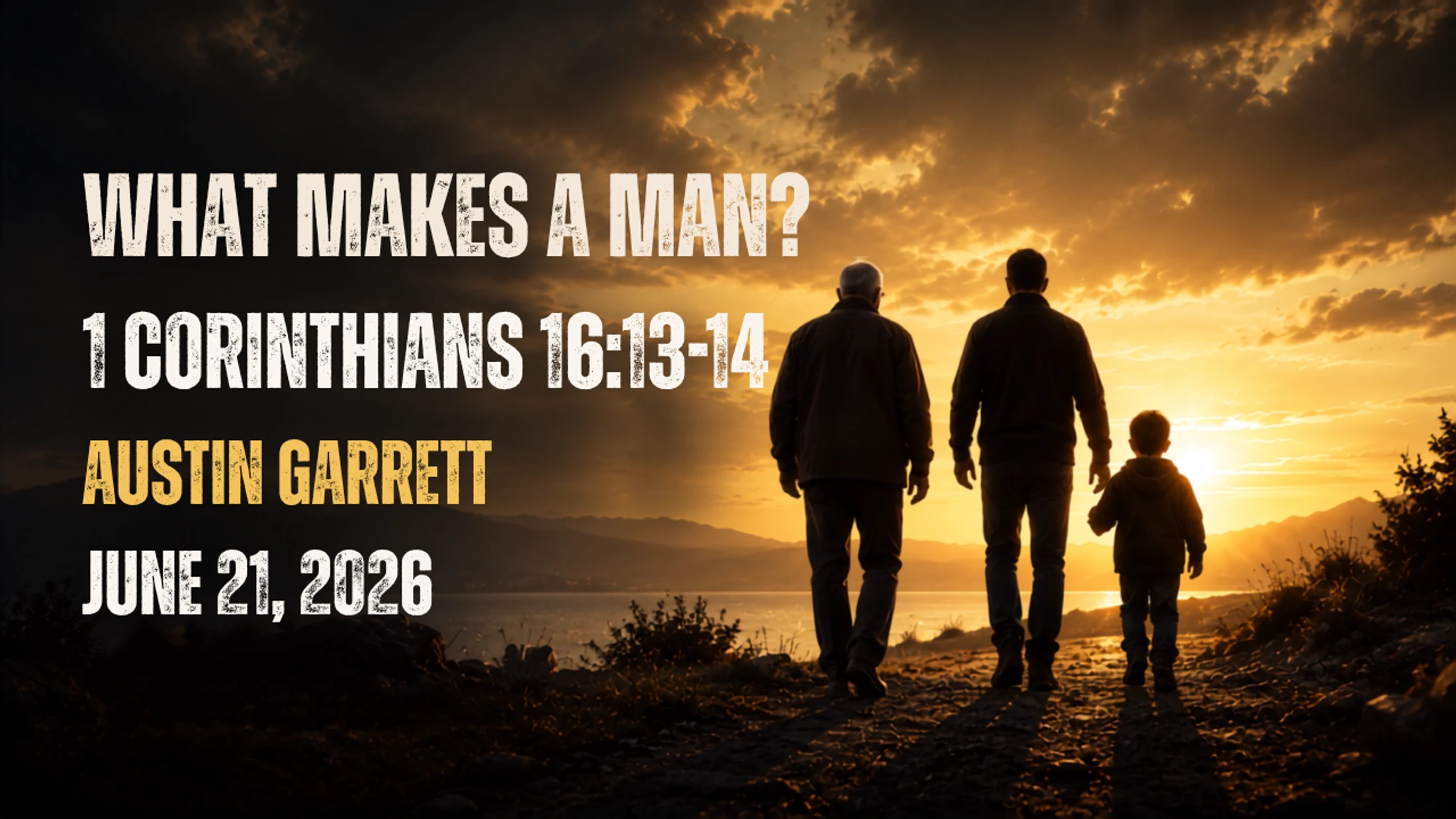
A Disney movie might not be where you expect a lifelong question to begin—but for one pastor, it was.
As a kid, he watched Mulan on repeat. One song in particular stuck with him: “Make a Man Out of You.” It raised a question that followed him from childhood into adulthood, through friendships, through seasons of growth, and eventually into fatherhood:
What makes a man?
It is a question many men ask. Culture offers plenty of answers- strength, success, charisma, confidence, but they often feel incomplete. For some, the search becomes even more personal when responsibility grows: marriage, children, leadership, legacy.
But Scripture does not leave us guessing.
A Better Definition of Manhood
In 1 Corinthians 16:13–14 (NIV), the apostle Paul gives a clear and compelling picture: “Be watchful, stand firm in the faith, act like men, be strong. Let all that you do be done in love.”
In a world full of confusion about masculinity, this passage offers something better, not a cultural stereotype, but a Christ-centered calling.
Paul is writing to a church in Corinth marked by compromise, division, and immaturity. His closing words function like a final charge, a rallying call for faithful living. At the center is the command to “act like men,” surrounded by four defining traits that show us what that actually means.
1. A Man Is Watchful
To be watchful is to live with spiritual awareness.
Jesus used this same language in the Garden of Gethsemane, urging His disciples to stay alert so they would not fall into temptation. Likewise, 1 Peter 5:8 warns that our enemy prowls like a lion, looking for someone to devour.
This is not about paranoia; it is about preparedness.
A godly man pays attention to his vulnerabilities. He knows where he is most tempted, whether in pride, anger, lust, passivity, or distraction, and he guards those areas intentionally. He does not drift through life unaware; he stays spiritually awake.
2. A Man Stands Firm
To stand firm is to persevere.
Life will test every man. There will be seasons of loss, uncertainty, conflict, and pain. The question is not whether hardship will come; it is whether you will remain faithful when it does.
Standing firm means refusing to give up on your faith when life gets hard. It means holding your ground when compromise would be easier.
James 1 reminds us that trials produce perseverance, and perseverance produces maturity. Over time, steadfast faith shapes men to look more like Jesus.
3. A Man Is Strong
Biblical strength is not about physical power or outward toughness; it is about deep trust in God.
In Joshua 1:9, strength and courage are rooted in one truth: “The Lord your God will be with you wherever you go.”
A strong man is not self-reliant; he is God-reliant.
He faces challenges with confidence, not because he has all the answers, but because he knows who does. His strength is revealed in faith, humility, and obedience.
4. A Man Loves
This may be the most surprising, and most important, command of all.
“Let all that you do be done in love.”
The word Paul uses is agape: a self-sacrificing, others-first love. It is the same love God showed us through Jesus.
In a culture that often equates love with weakness, Scripture declares the opposite. Love is strength at its fullest expression.
This love shows up in everyday moments:
In how a father speaks to his children
In how a husband navigates conflict
In how a son cares for aging parents
In how a man treats strangers, coworkers, and even difficult people
Not some things. Not when it is easy. Everything.
The Foundation: A Father’s Love
At the heart of this calling is not performance, but identity.
We do not strive to become men so that God will love us. We pursue godly manhood because He already does.
Jesus told a story about a father whose son ran away, squandered everything, and returned home expecting rejection. Instead, the father ran to him, embraced him, and celebrated his return.
That father is a picture of God.
He is watchful, waiting for His children.
He stands firm, never abandoning them.
He is strong, able to save and restore.
And He does everything in love.
This is the love we have received, and the love we are called to reflect.
Becoming the Man God Created You to Be
So, what makes a man?
Not culture.
Not charisma.
Not status or success.
A man is watchful.
A man stands firm.
A man is strong.
A man does everything in love.
And ultimately, a man looks like Jesus.
If you read that list and feel like you fall short, you are not alone. The good news of the gospel is that Jesus has already succeeded where we have failed. He was watchful where we were careless, steadfast where we wavered, strong where we were weak, and loving even in the face of our sin.
Through Him, we are not just forgiven, we are formed.
At The Crossing, this is the kind of manhood worth pursuing. Not for our sake alone, but for our families, our church, and our community.
Because when men live this way, it is better for everyone.
And it all starts here: “Be watchful, stand firm in the faith, act like men, be strong. Let all that you do be done in love.”
Ready to Go Deeper?
1. Watch the Full Message
This blog is based on the sermon "What Makes A Man | 1 Corinthians 16:13–14." Watch the full message in our sermon library and hear it the way it was preached.
2. Explore the Men's Summit Series
Want to go even further? Our Men's Summit 2026 series tackles the real battles men face — passivity, pride, lust, anxiety, and isolation — with biblical honesty and practical truth. It's one of the most direct conversations we've had about manhood.
3. Find Your People in a LifeGroup
The qualities in 1 Corinthians 16 — watchfulness, steadfastness, strength, love — don't grow in isolation. They grow in community. LifeGroups are where men sharpen each other, do life together, and walk out their faith week to week.
-Post contributed & edited by Dave, one of our amazing volunteers!